
How to Tell LED Polarity: A Beginner's Guide
This guide explains how to tell LED polarity for common through-hole LEDs like the 3mm, 5mm, and 10mm sizes. Correctly identifying the positive (anode) and negative (cathode) legs is the most important step when wiring an LED. If you connect it backwards, it will not light up. Luckily, there are three easy visual cues to identify the polarity of your LED.
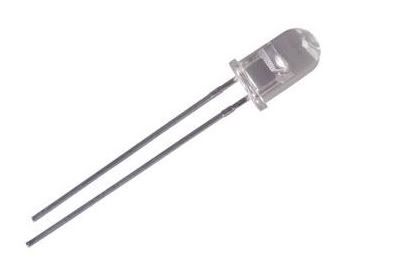
Why is LED Polarity Important?
An LED is a "Light Emitting Diode." A diode is an electronic component that only allows electrical current to flow in one direction. Therefore, if you try to send power through it the wrong way, no current will pass, and the LED will not light up. Unlike some components, reversing the polarity will not usually damage a standard LED, but it will prevent your circuit from working correctly. For this reason, knowing **how to tell LED polarity** is a fundamental skill for any electronics project.
Method 1: Check the LED Leg Length
The easiest and most common way to determine polarity is to look at the two legs, or leads, coming out of the LED. On a new, uncut LED, one leg will be longer than the other.
- The **longer leg** is the positive (+) side, also known as the anode.
- The **shorter leg** is the negative (-) side, also known as the cathode.
This is the most reliable method, but it only works if the legs have not been trimmed to the same length.
Method 2: Find the Flat Edge of the LED
If the legs have been cut, you can look at the plastic lens or housing of the LED itself. If you look at the bottom rim of the LED, you will notice that one side is perfectly round, while the other side has a small flat edge.
- The side with the **flat edge** indicates the negative (-) leg, or the cathode.
This method is very useful for LEDs that are already soldered into a circuit board where you cannot see the leg length.
Method 3: Look Inside the LED Lens
Finally, if you cannot use the first two methods, you can look directly inside the clear (or colored) plastic lens of the LED. You will see two small metal parts. One part looks much larger than the other.
- The **larger** metal piece inside the lens is called the anvil. This indicates the negative (-) side, or the cathode.
- The **smaller** metal piece is called the post. This is the positive (+) side, or the anode.
This internal indicator is a permanent feature of the LED and can always be used to check polarity.
Conclusion on How to Tell LED Polarity
In conclusion, you now know three simple ways for **how to tell LED polarity**. You can check the leg length, look for the flat edge on the housing, or inspect the size of the metal parts inside the lens. By using these methods, you can ensure your LEDs are always connected correctly, allowing your projects to light up as intended.